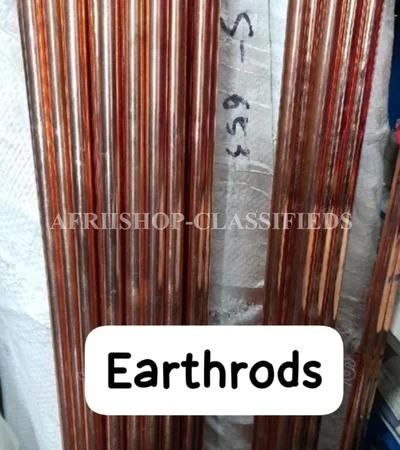
Earth rods are typically manufactured from high-conductivity materials such as copper-bonded steel, solid copper, galvanized steel, or stainless steel. They are available in various lengths (commonly 1.2 m to 3 m) and diameters, depending on the soil conditions and required grounding resistance. Copper-bonded steel rods are widely used because they combine the strength of steel with the corrosion resistance and conductivity of copper.
Key features:
Provides a safe path for fault and lightning currents.
Reduces the risk of electric shock and equipment damage.
Corrosion-resistant for long service life.
Available with threaded ends for coupling multiple rods to achieve lower earth resistance.
Suitable for residential, commercial, and industrial electrical installations.
Typical applications:
Electrical distribution systems
Buildings and homes
Industrial plants
Telecommunications sites
Solar photovoltaic (PV) systems
Lightning protection systems
Substations and transformer installations
Earth rods are installed vertically into the ground and connected to the electrical earthing conductor using approved earth clamps or connectors. The effectiveness of an earth rod depends on factors such as soil resistivity, rod length, and installation depth.